
Graduate Student Eileen Murphy: How are Canadian food retailers addressing food waste, and how may they empower employees to be agents of change in these efforts?
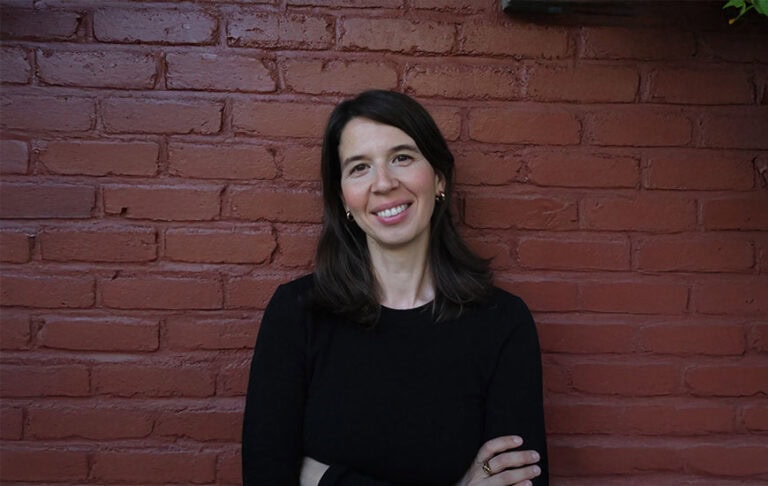
In 2024, after taking a career break, Eileen Murphy discovered Bishop’s University’s Sustainable Agriculture and Food Systems (SAFS) program and decided to enroll in the one-year certificate. The topics covered, especially those related to food systems and business, immediately captivated her. This experience inspired her to pursue an individualized Master’s program, which she began in September 2025. Under the supervision of Dr. Bryan Dale and Dr. Juan Francisco Nunez. Eileen’s research focuses on food waste which is an issue that directly aligns with SAFS’ mission of sustainability and food security
Her research explores how Canadian food retailers are addressing food waste and how they can empower employees to become agents of change in these efforts. The objectives of her research are to identify existing food-loss-reduction mechanisms linking food producers, retailers, and consumers; uncover solutions that could be adapted to the Canadian context (including policy and corporate social responsibility initiatives); and explore how employees’ intrapreneurial efforts can contribute to reducing food waste.
Her decision to focus on food waste stems from the urgent social, environmental, and financial impacts this issue has on all stakeholders. The numbers are staggering: in 2019, Second Harvest’s The Avoidable Crisis of Food Waste report revealed that 58% of food produced in Canada is wasted, with 32% of that being avoidable. The total cost of this waste amounts to $49.46 billion annually. Pairing these statistics with rising food prices and food insecurity where one in four Canadians faces uncertainty about their next meal, underscores the urgency of addressing food waste.
Eileen’s research aims to contribute to a broader understanding of food waste reduction by focusing on the role of retailers, employees, and policymakers. By examining how these groups can collaborate, she hopes to uncover actionable insights and solutions that can be implemented to reduce waste at the retail level. One of her goals is to influence policy change, drawing lessons from other countries that have successfully managed food waste.
Despite the wealth of existing research on food waste, there remains a gap in understanding the role of employees in driving change within organizations. This is an area Eileen is particularly excited to explore through primary research interviews, which she plans to conduct in 2026. These interviews will help fill this gap and document best practices that can be shared across industries.
Though she is still early in her program, Eileen has already begun developing important research and methodological skills. One of her key challenges has been improving her speed-reading skills to efficiently process large volumes of research. She is also gaining insight into what organizations value when it comes to food waste reduction and who within these organizations influences policy decisions. Returning to academia after several years has been a rewarding challenge, and she is excited to rediscover the joys of learning.
Balancing the demands of graduate studies, research, and personal life has required careful planning and discipline. To stay on track, Eileen created a detailed roadmap of activities, which she shares with her supervisors. This living document helps her prioritize academic and research commitments while ensuring she makes time for family, recreation, and self-care. She has also integrated daily swimming, yoga, and mindful energy management into her routine, which help her stay focused and energized.
Looking ahead, once Eileen completes her Master’s, she hopes to work with an organization dedicated to reducing food waste, and whether through policy advocacy or by supporting food rescue initiatives. For now, she is thoroughly enjoying the process of being a student and feels confident that her journey will lead to a fulfilling career focused on sustainable food systems. Just as her path led her to Bishop’s University, she is excited to see where it takes her next.
Eileen’s passion for food systems, combined with her professional experience and academic curiosity, is setting her on a meaningful path toward contributing to the reduction of food waste in Canada. Her work promises to make a lasting impact on the field.
—
Joannie St-Germain B.Sc. ’16, M.Sc. (she/her/elle)
RESEARCH OFFICER
OFFICE OF RESEARCH AND GRADUATE STUDIES
819-822-9600 x 2242