Research Academic Profile with Malé Fofana
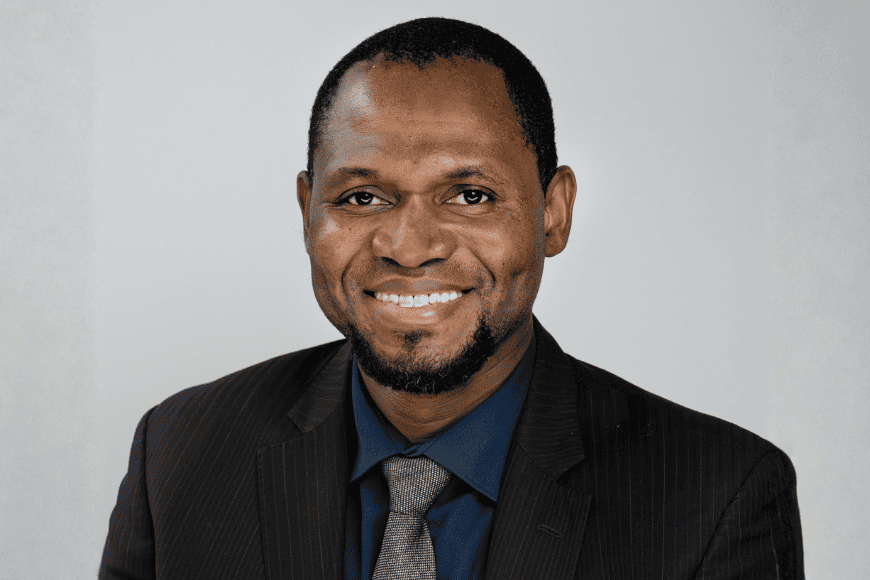
Malé Fofana is a scholar in French language education working at the intersection of sociolinguistics, second language acquisition, and pedagogy. His academic background is rooted in French studies, linguistics, and education, with a particular focus on how language functions within social, cultural, and educational contexts. Over time, he has developed a strong interest in multilingualism, linguistic variation, and identity construction in language learning environments.
His academic journey has been shaped by both personal and professional experiences with multilingualism. Navigating different linguistic environments led him to reflect on how learners construct meaning across languages and how identity is negotiated through language use. These experiences, along with the influence of inspiring educators, guided him toward a research focus centred on sociolinguistics and language education.
At Bishop’s University, he values the close-knit academic environment, which fosters meaningful interaction with students and supports a reflective, student-centred approach to teaching. This setting aligns with his commitment to engagement, critical thinking, and active participation.
His research focuses on the challenges and strategies of second language learners, particularly in relation to code-switching, linguistic insecurity, and the use of multiple linguistic resources. Rather than viewing these as deficits, he approaches them as assets that can inform more inclusive and effective teaching practices.
His work aims to bridge the gap between theoretical knowledge and real-world language use. He advocates for approaches to language teaching that reflect authentic communicative practices and support learners in developing both confidence and competence. Ultimately, he hopes his research contributes to curriculum design and pedagogical models that recognize multilingualism as a resource.
Currently, he is working on language development in professional contexts. He examines how learners can build autonomy, improve linguistic accuracy, and develop communicative competence in French within workplace environments. A key objective is to better understand how learners can progressively become confident and independent users of the language in professional settings.
In terms of dissemination, he adopts a scholarship of the personal approach. He aims to make his work accessible not only to researchers, but also to learners and practitioners who may not be familiar with technical terminology. His goal is to ensure that individuals can understand what is at stake and apply these insights to their own learning paths and professional contexts.
Looking ahead, he envisions a future where language learning is approached in a more holistic and inclusive way. He believes multilingualism should be recognized as a strength, and that research and teaching should increasingly integrate sociolinguistic awareness, identity, and real-world communication into language education practices.
—
Joannie St-Germain B.Sc. ’16, M.Sc. (she/her/elle)
RESEARCH OFFICER
OFFICE OF RESEARCH AND GRADUATE STUDIES
819-822-9600 x 2242