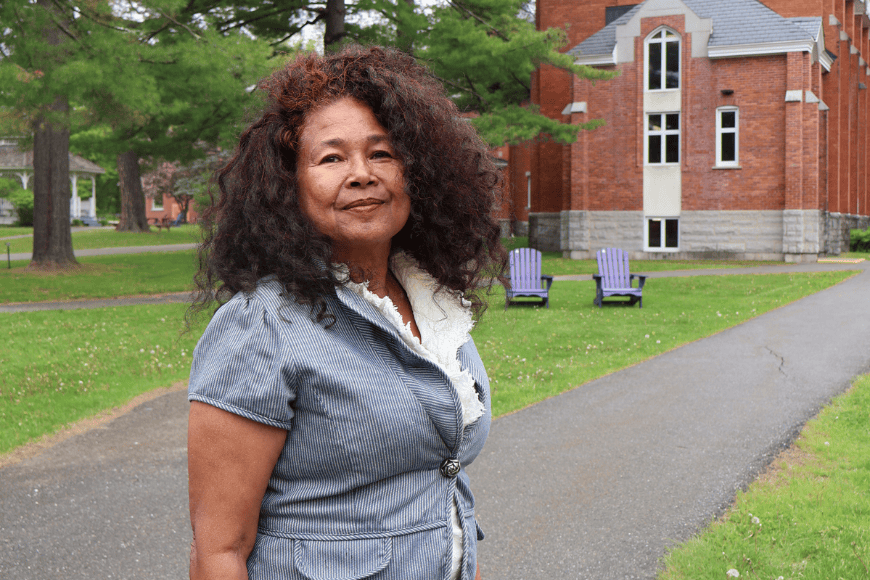
Research Academic Profile: Layla AbdelRahim
Layla AbdelRahim’s educational and intellectual journey has been shaped by a lifelong fascination with the many ways humans understand and interact with the world. From an early age, she was deeply interested in the natural sciences and mathematics, as well as the social sciences, humanities, environmental studies, and fine arts. During her final year of junior school in the British educational system, she was required to choose between the arts and humanities track or the sciences. Although passionate about all disciplines, she ultimately chose science and mathematics at a time when few women pursued the hard sciences.
At the age of sixteen, she began her first undergraduate degree in civil engineering. The practical aspects of engineering, especially projects involving roads and dams, made her increasingly aware of the destructive impact of urban development on wilderness and ecosystems. At the same time, the outbreak of the Second Civil War in Sudan compelled her to understand the deeper social and environmental causes of violence, injustice, and conflict. This led her into two years of journalism and refugee aid work with Sudan Times, during which she travelled extensively throughout North East Africa covering war and displacement. Although journalism exposed her to the realities of human suffering and resilience, it did not provide the answers she sought regarding the roots of violence. Her internationally recognized interviews with leaders from both sides of the civil war earned her full scholarships from all the Ivy League institutions to which she applied.
She chose to attend Bryn Mawr College, where she majored in Comparative Literature and Russian Studies. Her Liberal Arts education there profoundly shaped her intellectual development. Bryn Mawr’s Quaker principles, including honour, intellectual rigor, and respectful dialogue, resonated deeply with her own values. The interdisciplinary environment allowed her to immerse herself in the humanities, sciences, and social sciences while refining a comparative and interdisciplinary approach to research. Her honours thesis explored the intersections of history, anthropology, linguistics, and literature in the construction of national identity, emphasizing the importance of comparative perspectives in understanding culture and society.
After graduation, she was awarded the prestigious Thomas J. Watson Foundation Fellowship, which enabled her to conduct independent comparative anthropological fieldwork across Europe. During this period, she studied the interactions between immigrant Muslim women and health and legal institutions in France, England, Sweden, and Russia. The project examined the relationship between identity, culture, institutions, and notions of homeland, while also illuminating the broader political and economic dimensions of identity formation. This experience deepened her understanding of civilization and its implications for human relations.
While conducting research in Sweden, professors from the Department of Anthropology at Stockholm University invited her to pursue graduate studies there. She completed a Master’s degree in social sciences with a focus on anthropology. Her fieldwork examined women’s participation in Russian Rock culture, exploring identity through gender, language, and music associated with rebellion and resistance.
Following the completion of her thesis, she worked as a socio-medical anthropologist for the Swedish Health Board on a project titled The Encounter (Mötet). This comparative research analyzed Swedish, Somali, and Vietnamese medical cultures and institutions, examining the intersections of language, cultural identity, medicine, and institutional structures. The work highlighted how legal, economic, and medical systems define concepts such as health, deviance, legality, and normalcy, while shaping social identities and understandings of violence.
Her research in Sweden inspired her to investigate more deeply the nature of knowledge itself and the social structures that shape it. She therefore pursued doctoral studies in the Epistemology track within the Department of Comparative Literature at Université de Montréal. Her doctoral dissertation, Order and the Literary Rendering of Chaos: Children’s Literature As Knowledge, Culture, and Social Foundation, brought together anthropology, sociology, economics, environmental studies, religion, and comparative literature. In this work, she examined how narratives of civilization and wilderness are constructed and transmitted through literature, particularly children’s literature, while analyzing the broader implications of domestication, order, violence, and ecological destruction.
Her intellectual pursuits have consistently been driven by fundamental questions concerning humanity’s relationship with nature, violence, and systems of knowledge. Experiences ranging from witnessing environmental destruction and war to working with refugees and engaging in comparative anthropological fieldwork shaped her commitment to interdisciplinary research. Influential figures throughout her life included the editor-in-chief of Sudan Times, Bona Malwal, who encouraged her intellectual independence; Betty Vermey of Bryn Mawr College, who welcomed her with a full scholarship; and Professor Linda Gerstein, whose mentorship instilled in her a rigorous historical methodology and high scholarly standards. She also credits the vibrant intellectual community at École des hautes études en sciences sociales, particularly the mentorship of Nicole-Claude Mathieu, as formative in her academic development.
Layla AbdelRahim was drawn to Bishop’s University because of its commitment to Liberal Arts education and its emphasis on interdisciplinarity, multilingualism, diversity, and critical inquiry. She sees strong parallels between Bishop’s values and the educational traditions she experienced at Bryn Mawr College. Her broad international research experience and interdisciplinary expertise align closely with the university’s goals of fostering diverse perspectives and integrating multiple fields of knowledge.
Her scholarship critiques civilization through the study of wilderness and life systems, creating new connections between anthropology, violence, knowledge production, economics, environmental studies, literature, and education. She has developed a comparative and interdisciplinary methodology that examines the underlying premises shaping human behaviour and anthropocentric systems of knowledge. Her work has already had a substantial international impact across numerous disciplines.
She is the author of two major single-authored books: Wild Children—Domesticated Dreams: Civilization and the Birth of Education and Children’s Literature, Domestication, and Social Foundation—Narratives of Civilization and Wilderness. Her work has been translated into multiple languages, including Chinese, Czech, French, Italian, Hindi, Portuguese, Russian, Ukrainian, and Urdu. She has been invited to deliver lectures and keynote addresses internationally at universities, conferences, and public forums spanning fields such as pedagogy, philosophy, environmental studies, sociology, anthropology, economics, literature, and political science.
Among the many recognitions of her work, she was selected in 2016 as one of the world’s leading innovative pedagogues to participate in the Maverick Teachers Global Summit organized by the Agastya International Foundation. There, she contributed to developing educational models focused on sustainability and rewilding. Her work has also been featured in interviews, academic reviews, radio programmes, podcasts, and publications internationally, including commentary for The New York Times and CBC Radio.
Currently, she is working on three major book projects. The first proposes a radically new framework for economics and humanity’s relationship with nature. The second examines the domestication of horses through the lens of the critique of civilization, drawing on extensive field research in Central Asia. The third project combines philosophy, anthropology, and personal travel reflections inspired by her visits to archaeological sites during her recent research travels.
Through her work, Layla AbdelRahim continues to develop what she describes as a new anthropology—one that compares the practices and cultures of civilization with those of wilderness. Her scholarship challenges dominant frameworks of knowledge while offering new perspectives on ecology, violence, education, and human relations. She believes the future of education and research depends on revitalizing the Liberal Arts by reconnecting the exact sciences with the natural sciences, humanities, social sciences, and the arts in order to address the urgent crises facing future generations.
Joannie St-Germain B.Sc. ’16, M.Sc. (she/her/elle)
RESEARCH OFFICER
OFFICE OF RESEARCH AND GRADUATE STUDIES
819-822-9600 x 2242