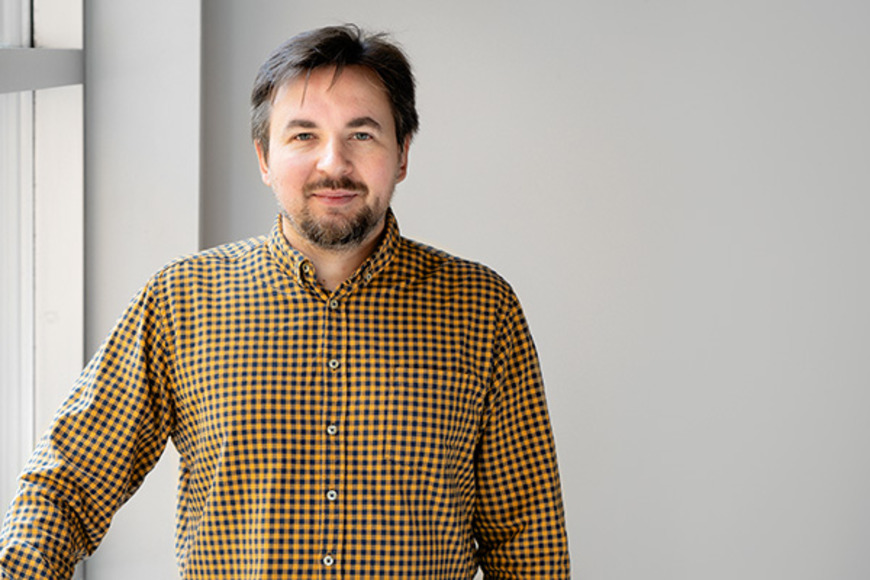
Dr. Alex Miltsov awarded the SSHRC Insight Grant for his project, titled “Worker Experiences in the Age of Generative AI: A Study of Cognitive Labour in Canada”
Alex Miltsov has been awarded a $168K funding over three years. This research explores how generative artificial intelligence (AI) is reshaping the world of labour, particularly in professions that rely heavily on cognitive tasks such as thinking, writing, and problem-solving.
Dr. Miltsov is the Principal Investigator of the project. He is joined by two co-investigators from Canada: Dr. Anabel Quan-Haase from Western University and Dr. Xavier St-Denis from the Institut national de la recherche scientifique. In addition, Dr. Kathrin Komp-Leukkunen from Lappeenranta University of Technology in Finland joins the project as an international collaborator. Together, this international team brings a multidisciplinary lens to the study of how technological changes intersect with labour dynamics and worker well-being.
As the use of generative AI becomes prevalent across industries—including education, finance, and law—there is a growing concern about how these technologies affect job security. The project focuses on the experiences of Canadian workers who have either lost their jobs or experienced significant changes in their roles as a result of generative AI implementation in the workplace.
The objective of the study is to understand why and how some workers are being replaced by generative AI, the decision-making processes senior managers use when choosing to substitute human labour with generative AI tools, and how job displacement affects individuals emotionally, financially, and professionally. To investigate these questions, the research will use a mixed-methods approach that combines in-depth interviews and surveys. The study will focus on three key sectors: banking and finance, design, and the legal profession.
This research is significant not only for its originality and depth but also for its broader relevance. The findings aim to inform public policy, workplace practices, and continuing education strategies to support workers navigate the transition toward an AI-driven economy. By centring the voices and experiences of affected workers, the project contributes to fostering inclusive and equitable approaches to managing technological transformation in the labour market.
Congratulations to Alex and the team!