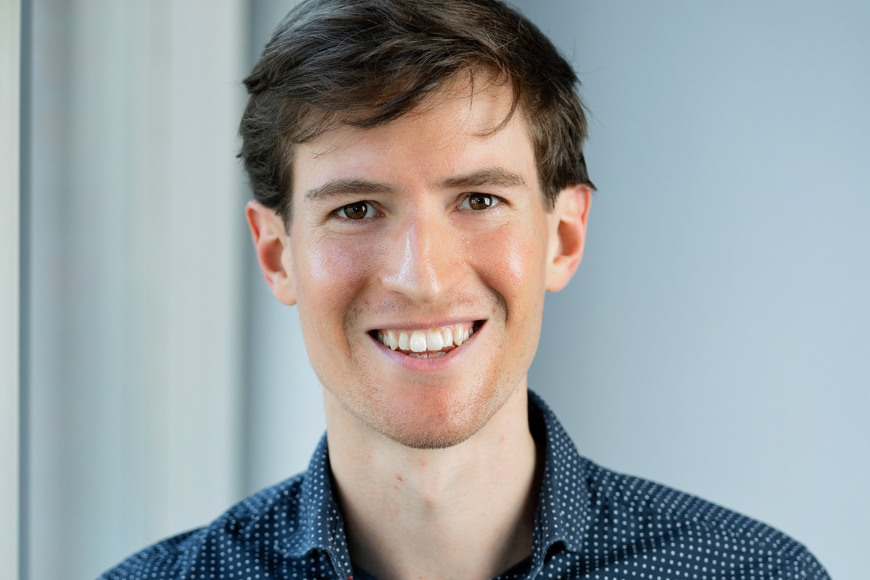
Research Academic Profile: Jacob Robbins-Kanter
Politics has always been a central interest for Jacob Robbins-Kanter. He believes the most important challenges and fascinating questions societies face are fundamentally political ones. During his undergraduate studies, he was drawn to questions such as how war and conflict can be prevented, how economic resources are distributed, and how diverse societies learn to live together. He completed a BA in Political Science at McGill University, focusing on Canadian and U.S. politics while minoring in History and Sociology. His interest in these subjects led him to pursue graduate studies at Queen’s University, where he began conducting research on federalism, regionalism, and the welfare state under the supervision of Professor Keith Banting.
Canada is a country that is deeply regionalized and culturally divided, yet it is studied by scholars around the world as an example of living successfully with diversity. That tension fascinated him: how do people with very different identities, histories, and worldviews share a political community? This question runs through much of his research. While completing his graduate studies, he was mindful of the challenges of the academic job market and prepared multiple backup options in both the private and public sectors. Fortunately, after completing his PhD, he secured what he describes as his dream job at Bishop’s University, allowing him to pursue his academic and research passions as a career.
His interest in politics was shaped early on by several important influences. Most significantly, his parents taught him and his brothers that caring about other people and the world around them means caring about and understanding politics. His high school teachers were also a major influence (a special shoutout to Mr. Webster, Mr. Thom, and Ms. Surtees). Another formative experience was participating in the Explore program as an Ontario high school student. Spending five weeks in Rivière-du-Loup opened his eyes to the incredible diversity of Canada and the distinctiveness of Quebec, sparking a lasting curiosity about Quebec politics and society.
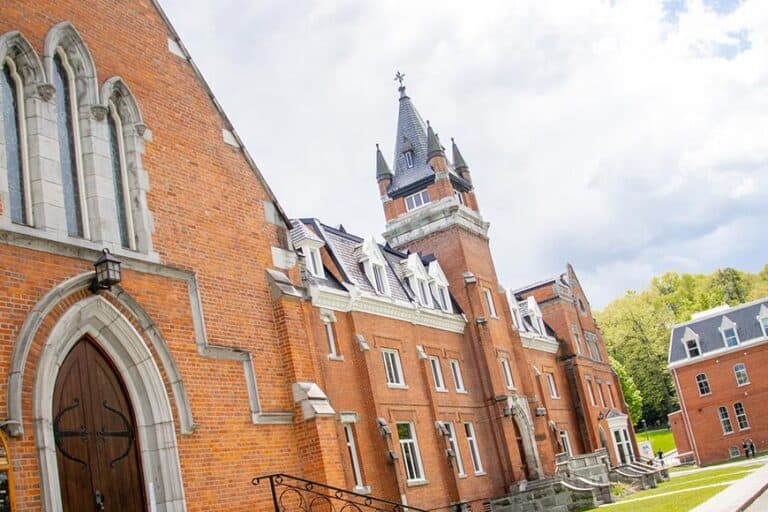
Jacob was initially drawn to Bishop’s University because of its smaller size, the academic strength of its faculty and students, and its location and atmosphere. He emphasizes that Bishop’s is situated in a stunning region; not only is the campus beautiful, but the broader Estrie region is among the most scenic parts of Canada. Since joining the university, he has come to appreciate how effectively Bishop’s balances a serious commitment to teaching with strong support for research. The university enables him to conduct the fieldwork necessary for his research, take on leadership roles within his scholarly community, and collaborate with colleagues at other institutions while remaining closely connected to students. Its emphasis on experiential and personalized learning ensures that students are engaged, challenged, and genuinely known by their professors. Bishop’s also actively encourages teaching innovation, and its dedicated alumni network provides career mentorship opportunities that many larger institutions struggle to match.
His current research follows several interconnected paths related to political representation and political communication. One area he finds particularly compelling examines how political parties can become more representative of people from working-class socioeconomic backgrounds, a group he argues has often been neglected by politicians, policymakers, and academics. He recently co-edited a book on this topic, The Working Class and Politics in Canada.
Another major focus of his research explores political communication—the language and strategies used by parties and politicians—and how it shapes the ways Canadians relate to one another. He asks whether political communication drives citizens further apart by hardening divisions and feeding polarization, or whether it can be used to foster more honest and meaningful public debate. In this area, he is currently working on a book about party leaders’ debates in Canadian elections.
For Jacob, this research is particularly important at a time when democratic norms are being tested and polarization is fracturing societies that once appeared stable, including Canada. Political communication has changed dramatically in recent years, and the language of politics has become a battleground in itself. Social media, partisan media ecosystems, and deliberate disinformation campaigns are reshaping how people understand the world. Understanding whether political communication pulls citizens apart or draws them into genuine dialogue is therefore a crucial area of study. He believes that identifying the kinds of communication that foster trust and meaningful debate rather than outrage and division has practical value for policymakers, politicians, journalists, and citizens alike. Ultimately, he hopes his research will contribute not only to scholarly discussions but also to the broader project of helping democracies function more effectively through more inclusive and representative political systems.
Looking at the world today, Jacob sees a moment that makes the stakes of politics impossible to ignore. In his view, it is impossible to understand how the world works without political science. As a result, he believes the field is more important than ever and hopes that more young scholars will be drawn to studying political science.
Joannie St-Germain B.Sc. ’16, M.Sc. (she/her/elle)
RESEARCH OFFICER
OFFICE OF RESEARCH AND GRADUATE STUDIES
819-822-9600 x 2242