Post-Doc Dr. Dilara Baysal: Exploring How Generative AI is Reshaping Work, Employment, and Worker Experiences
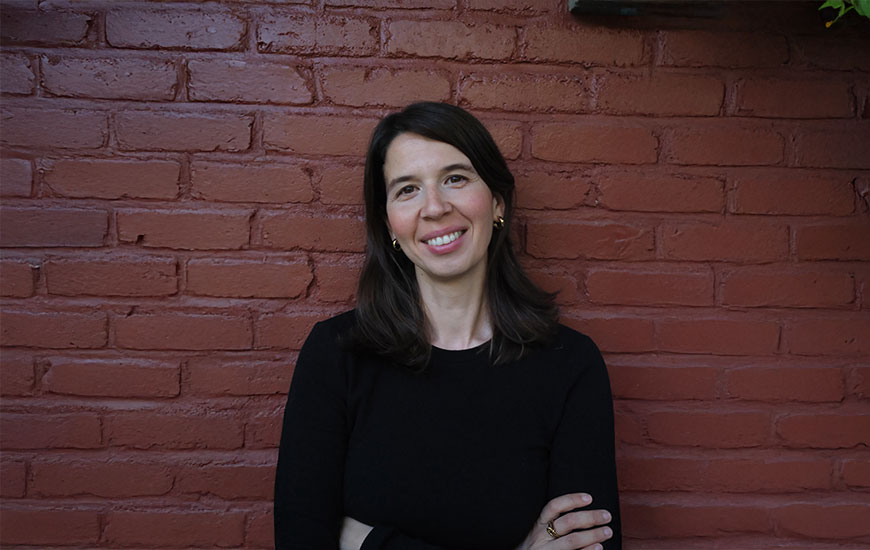
Dr. Dilara Baysal’s academic and professional journey has been shaped by a longstanding interest in how economic change affects people’s working lives. She studied Political Science at Middle East Technical University in Ankara, Turkey, before moving to Canada to complete her master’s degree in Political Science at McMaster University in Hamilton, Ontario. Although the program offered several areas of specialization, she chose to focus on political economy and public policy, driven by a growing interest in understanding how economic crises, labour market transformations, and policy decisions affect workers and communities. That decision laid the foundation for the research questions that continue to guide her work today.
During her master’s studies, she worked as a Research Assistant on a project examining the social and economic consequences of the 2008 global financial crisis and austerity policies. Analyzing government data, policy documents, and labour market trends provided firsthand insight into how economic policies influence workers, communities, and broader social outcomes. This experience sparked a lasting interest in how economic change shapes work, inequality, and public policy.
After completing her master’s degree, Dr. Baysal moved to Toronto and entered the technology sector. She joined Wattpad, a Toronto-based technology startup, where she initially managed content and community initiatives before leading international partnerships and strategic business initiatives. Later, while transitioning back to academia, she continued to work as a Business Analyst on projects involving data analysis, business strategy, and operational planning. These experiences in fast-paced technology environments offered valuable insight into organizational change, innovation, and the realities of contemporary work—experiences that continue to shape the questions guiding her research today.
Supported by the Joseph-Armand Bombardier Canada Graduate Scholarship, a nationally competitive doctoral award from the Social Sciences and Humanities Research Council (SSHRC), She completed her PhD at Concordia University in 2024. Her doctoral research examined how changes in the organization of work are transforming managerial roles and employment relations in technology-intensive industries. Drawing on interviews with managers across Canadian technology startups, she explored how technological innovation, organizational growth, and investor expectations shape workplace experiences and working conditions.
Dr. Baysal was drawn to Bishop’s University by its collaborative research environment and the opportunity to work with Dr. Alex Miltsov, whose research on work, technology, and labour processes closely aligns with her own interests. She also values the University’s commitment to interdisciplinary collaboration and meaningful connections among researchers, students, and the broader community. For a scholar interested in contributing to both academic research and public policy discussions surrounding the future of work, Bishop’s offered an ideal environment for this work. Today, as a SSHRC-funded postdoctoral researcher at Bishop’s University, she will investigate how generative AI is transforming work, employment security, and social protections for workers in Canada.
Her research examines how generative artificial intelligence is reshaping work and employment in Canada. While AI is often discussed in terms of productivity and competitiveness, her research focuses on its impact on workers. Through interviews and stakeholder engagement, she explores how knowledge workers in finance, banking, software development, and the legal professions are experiencing AI-driven workplace change, including restructuring, layoffs, and growing pressure to adapt to new technologies. She also examines whether existing policies and reskilling initiatives are keeping pace with these changes.
To better understand today’s AI revolution, the research places it within a broader historical context. By comparing contemporary developments with earlier technological shifts including the mechanization of newspaper printing and the introduction of office machinery in Canadian financial institutions, she examines how ideas surrounding technological progress, labour displacement, and adaptation have evolved over time. She also compares emerging European Union regulations on workplace AI with the evolving Canadian policy landscape, exploring different approaches to worker monitoring, automated decision-making, transparency, accountability, and workers’ rights. As artificial intelligence becomes increasingly embedded in workplaces, Dr. Baysal hopes her research will inform policies that support job quality, economic security, and worker well-being. Ultimately, she hopes to encourage conversations about how technological progress can serve society while ensuring that workers remain at the centre of decisions that shape the future of work.