Perimeter Institute PSI START Satellite Program
What is the PSI START Satellite Program?
A 2-week in-person summer school to explore modern theoretical physics.
Access world-class researchers and learn collaborative skills.
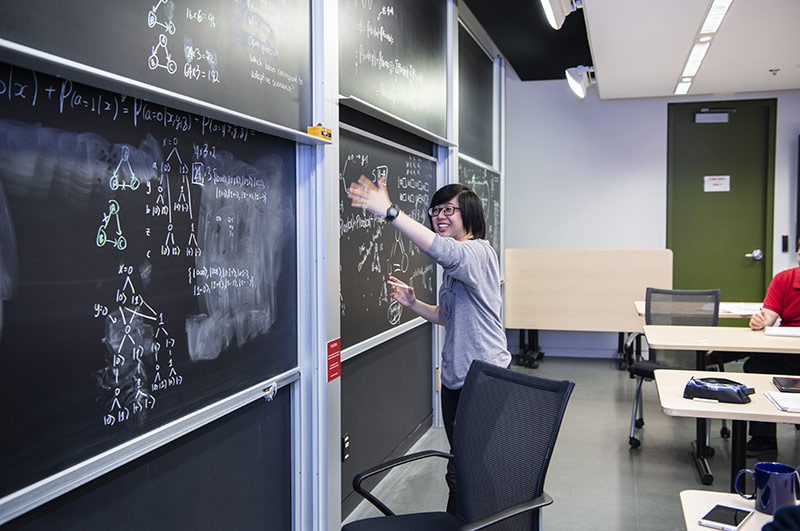
The Perimeter Institute (PI) is a world-leading research centre in theoretical physics. PSI START Satellite at Bishop’s, funded by Perimeter, is a satellite program of the Perimeter Scholars International (PSI) START program for undergraduates. START is an acronym for Students’ Training Accelerator for Research in Theory (PSI START) program and is sponsored by PI. It runs in-person over a 2-week period and it includes courses, tutorials, and problem-solving sessions.
The Department of Physics & Astronomy of Bishop’s University (Sherbrooke, Quebec) is now accepting applications for the 2025 PSI Start Satellite Program. The summer school extends from Sunday, May 18th to Sunday, June 1st, 2025.
Features of the program include:
The PSI START Satellite program is a formalized partnership between Perimeter Institute and Bishop’s University. It will multiply the reach of Perimeter’s commitment to education and help foster a new generation of theoretical physicists around the world.
If you would like to join a group of keen, like-minded students to be mentored by experts studying cutting-edge problems in physics, please read the information below carefully and apply before April 14th!
Applications are now closed.
PSI Satellite Program
This satellite program is an extension of the PSI START Program, which commenced in 2019 to give undergraduates considering a career in theoretical physics an opportunity to deepen their training in the field and explore topics they might not have covered.
The small size of the PSI START Satellite Program (10 students) is intentional. “We’ve experimented with different formats, trying to figure out what is the most effective way to deliver our material, engage our students and provide quality training,” explains Dan Wohns, Associate Director of Training Programs at Perimeter. This testing has led to the realization that interactive learning, where an instructor provides guidance as students engage and learn from each other, works best with smaller class sizes.
“But at the same time we want to have as big an impact as we can across the world,” says Wohns. The satellite programs are one of the ways Perimeter has found to expand its reach, with Perimeter providing materials and teaching methods that have been developed in-house to other institutions across the globe and, more importantly, to additional students.
Theoretical physics is a field that lends itself well to international dissemination. Unlike other areas of science that require specialized equipment and space, Wohns explains that one of the best ways to learn theoretical physics is through collaboration and peer instruction. “That’s part of the motivation for why we decided on this model,” Wohns says. “The financial costs for the partner institutions are extremely low, which lends itself to scaling.”
In order to host a satellite program, partner institutions only need space, computers to access the material provided by Perimeter, instructors and, of course, students hungry to delve deeper into theoretical physics.
Contact Us
If you have any questions about this opportunity, contact us at: psistartsatellite@ubishops.ca.
Frequently Asked Questions